Press & Resources
Government Announcements & Special Reports
Official announcements, executive actions, research, and in-depth reports

Transshipment Crackdowns Won't Fix the U.S.-China Trade Imbalance
CSIS commentary arguing that the White House's August report, The Great Transshipment Scam, attributes too much of the U.S.-China trade imbalance to transshipment by counting substantive manufacturing in third countries. It cites a 2026 Federal Reserve study finding that Chinese production in Mexico accounted for about 14 points of Mexico's export gains after the 2018-19 tariffs, against less than 1 point for direct transshipment, and recommends rules-of-origin reform, customs data sharing and changes to China's export tax rebates.
DOJ Directive Sets Prosecutorial Instructions for Trade Fraud Cases
DOJ’s October 7, 2026 directive turns stated priorities into instructions for prosecutors: pursue every responsible participant, add charges where warranted, seize assets before proceeds move, and use forfeiture and civil remedies together. The operational document behind the rhetoric.
CBP EAPA Cons. Case 8222: Evasion Determination on Seamless Steel Pipe Routed Through Thailand
CBP’s October 2, 2026 consolidated determination that Chinese seamless steel pipe was routed through Thailand to evade antidumping and countervailing duties. A finding of evasion is not a collection; the notice says nothing about recovered money.
Industry Backs Continuation of the Select Committee on China
Alliance letter to Speaker Johnson and Leader Jeffries asking that the House Select Committee on the CCP continue into the 120th Congress. Signed by all six founding members, it credits the Committee with pressing CBP, HSI and DOJ on enforcement gaps and moving the PAIL Act through the House.
CBP EAPA Case 8133: Evasion Determination on Mobile Access Equipment Routed Through Mexico (XCMG North America)
CBP’s September 28, 2026 determination that XCMG North America evaded duties on Chinese mobile access equipment shipped through Mexico, with combined duties of 69.31% on affected entries. The Mexico route, in CBP’s own words, with no recovery figure attached.
House Passes Hinson Bill to Combat China’s Trade Crimes, Protect American Workers
Rep. Ashley Hinson’s announcement of House passage of the Trade Crimes Act, H.R. 1869, which would create a dedicated federal framework for prosecuting trade crimes. House action is done; the Senate has not moved.
CBP Federal Register Notice: Accuracy of Importer of Record Data Submitted to CBP
Federal Register notice implementing Executive Order 14411: from September 18, 2026, CBP applies stronger identity verification to importers of record. Aimed at the shell and nominee importers that let a scheme continue after its first importer is caught.
DOJ Criminal Division Memorandum Reinforces Trade and Customs Fraud Priorities
Assistant Attorney General Colin McDonald’s August 13, 2026 memorandum reaffirming trade and customs fraud as Criminal Division priorities: transshipment, origin fraud, undervaluation, sanctions evasion and forced labor. The baseline against which DOJ’s output can be judged.
The Great Transshipment Scam: White House Report on Tariff-Evading Rerouted Trade
The White House report assembling five estimates of transshipment exposure, from $40 billion to $303 billion a year. The methods differ and none proves fraud, which the report concedes; the order of magnitude is the point.
A Resource Guide to Trade Fraud Enforcement
DOJ and DHS’s July 2026 guide to how the government investigates and prosecutes customs fraud, covering statutes, penalties, whistleblower mechanisms and the interagency framework. The most useful single document for understanding which tools exist and which agency holds each one.
Executive Order: Strengthening Customs Enforcement
June 2026 executive order mandating importer-of-record reforms, a 50% minimum penalty with no mitigation for repeat offenders, heightened disclosure and certification, and annual enforcement transparency reports. The transparency reports are the part worth holding the agencies to.
House Report 119-652: Commerce, Justice, Science Appropriations Bill (DOJ Trade-Fraud Enforcement Funding)
House Appropriations Committee report on the FY2027 Commerce, Justice, Science bill proposing a tenfold increase in DOJ trade-fraud enforcement funding. A committee recommendation, not an appropriation; it has to survive conference and a floor vote.

Comments to the US International Trade Commission Regarding the Economic Impact of Revoking China's PNTR Status
ITIF’s formal comments on revoking China’s Permanent Normal Trade Relations, estimating costs of up to $7 billion a year for national-power industries and identifying 930 import-dependent product categories. Useful for the realistic trade-offs behind any sharp change in China policy.

Cassidy Introduces Bill to Protect U.S. Markets from Fraud
Senator Bill Cassidy’s SAFE Act, introduced March 2026, aimed at the accountability gap for foreign importers of record who evade duties and vanish. Introduced, not enacted; one of several bills targeting the same hole.

New Head of DOJ Trade Fraud Task Force Signals Aggressive Enforcement Shift
Mayer Brown’s analysis of Cody Herche’s first remarks as Task Force head: a stated shift toward criminal prosecution and individual accountability, with $140 million recovered by the Task Force to date. Read it for the four initiatives he laid out, then check them against results.

Identifying Tariff Evasion: A Framework for Measuring Unexplained Trade
USITC working paper proposing a method for flagging possible transshipment by measuring trade that falls outside expected patterns. It is explicit that the result is a risk indicator, not proof, which is exactly what makes it usable for targeting.

27 Members of Congress Call for Investigation into Diversion of Federal Investigators to Immigration Enforcement
Letter led by Rep. Dan Goldman and Senators Warren and Blumenthal seeking an accounting of how reassigning federal investigators, including HSI agents, to immigration operations has affected complex investigations. Trade fraud cases run through HSI; nobody has published the capacity loss.

Krishnamoorthi, DeLauro Issue Statement on Empowering Trade Fraud Prevention Task Force
Representatives Krishnamoorthi and DeLauro’s statement backing a strengthened Trade Fraud Prevention Task Force, calling for interagency coordination, dedicated funding and stricter penalties. Bipartisan support for enforcement capacity, stated on the record.
Made in China 2025: Evaluating China's Performance
USCC assessment of how far China’s state-directed industrial plan has advanced in advanced manufacturing and emerging technologies, and at what cost to fair competition. Context for why the products in our case tracker so often originate in subsidized Chinese industries.
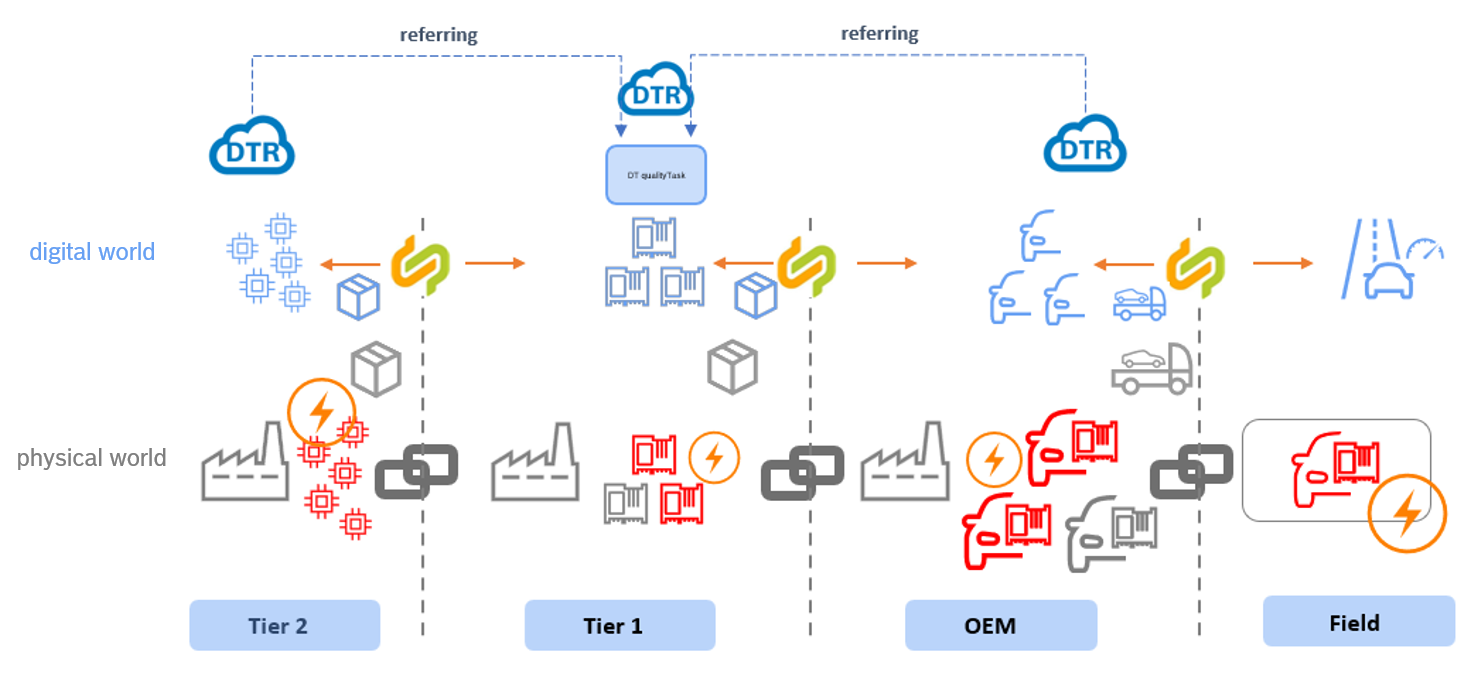
CX-0125 Traceability Use Case Standard
Catena-X’s automotive standard for tracing parts and materials across multi-tier supply chains, with interoperable data models and APIs. Included because the same infrastructure built for quality alerts could verify origin claims; it is a model of what provable origin looks like.

U.S. Businesses Across Industries Launch Alliance to Spotlight Trade Fraud and Demand Enforcement Outcomes
The launch announcement of the Alliance for Trade EnforcementNOW: manufacturers from different sectors, each harmed by tariff evasion, pooling documentation and intelligence to demand measurable enforcement outcomes. Our starting point.

CPA Welcomes DOJ and DHS Partnership on Cross-Agency Trade Fraud Task Force
The Coalition for a Prosperous America’s response to the DOJ–DHS Trade Fraud Task Force, welcoming coordination between prosecutors and investigators that had previously let cases fall between agencies. Its call for adequate staffing is the one to track.
CBP Uncovers More Than $400 Million in Duty Evasion by Bad Actors Who Undercut American Workers
CBP reports more than $400 million in unpaid duties found through EAPA investigations between January 20 and August 8, 2025, including its largest case ever: 23 importers and a network of Chinese shell companies routing through Indonesia, South Korea and Vietnam. Every importer examined was in violation.
Unpacking the Early Tariff Impact on China's Exports
ING’s data-driven look at how Chinese exporters shifted volumes to alternative markets in the first phase of higher tariffs. The patterns of diversion it identifies are the same patterns enforcement agencies need to anticipate.

Primer: The Threat of Tariff Evasion Within the U.S.
America Renewing’s foundational primer on the main evasion techniques, transshipment, undervaluation, misclassification and false origin certification, and the sectors they hit hardest. A good first document for a staffer or reporter new to the subject.
FY26 Implementation Status of Public Recommendations
DHS OIG and GAO tracking of which oversight recommendations to DHS components, including CBP, have been implemented and which remain open. A plain record of where accountability gaps in customs enforcement persist, written by the auditors rather than the agency.
How the China trade shock impacted U.S. manufacturing workers and labor markets and the consequences for U.S. politics
Washington Center for Equitable Growth review of what the China trade shock did to manufacturing regions: factory closures, lost jobs and lasting effects on wages and labor-force participation. The human ledger behind the enforcement debate.

Digital Trojan Horse
Analysis of how commercial technology imports can carry embedded software, hardware backdoors and surveillance capability into critical systems, with case studies and screening recommendations. Trade fraud and national security overlap here more than most enforcement discussions acknowledge.
U.S.–China Section 301 Tariff Evasion: 2018–2025
The Alliance’s own study of seven years of Section 301 evasion through transshipment, misclassification, undervaluation and de minimis abuse. Built on enforcement data and member testimony, it is the baseline against which we measure whether enforcement is improving.
The Economic Influence of China and the United States on Southeast Asia
Dr. Vikram Nehru’s USCC testimony on Southeast Asia’s role as China’s manufacturing hinterland and the strain the current China shock places on the region. Relevant because the same economies are the transshipment hubs that recur throughout our case tracker.

The China Wash: Tracking Products To Identify Tariff Evasion Through Transshipment
Caroline Freund’s product-level method for estimating transshipment of Chinese goods through third countries. Vietnam peaked above 7 percent of imports in 2020, Mexico never passed 1.5 percent, and closing one route pushed evasion toward Singapore and Thailand.
The Persistence of the China Shock
Harvard Kennedy School research finding that workers displaced by Chinese import competition never recovered their earlier earnings paths, and that adjustment assistance did little to change that. Evidence that enforcement failures impose costs that compound rather than fade.

University of Toronto Munk School Report
Munk School research on trade enforcement mechanisms and how well current regulatory approaches work across jurisdictions. Its emphasis on cross-border information sharing among customs authorities points to a gap that domestic enforcement alone cannot close.
Reset, Prevent, Build: A Strategy to Win America's Economic Competition with the Chinese Communist Party
The House Select Committee on the CCP’s three-pillar strategy for economic competition with China, with specific legislative recommendations for closing enforcement gaps and measuring reduced dependency. Several of the Committee’s proposals have since moved toward law.
How the US Lost the Solar Power Race to China
Bloomberg’s interactive account of how subsidies, below-cost pricing and technology transfer dismantled American solar manufacturing and left the supply chain under Chinese control. Solar panels also top the list of transshipped products in the China Wash study.
CBP Needs to Improve Its Oversight and Monitoring of Penalty Cases
DHS Inspector General audit of how CBP assesses penalties, tracks collections and closes cases. Its finding that penalty administration is inconsistent and poorly tracked is the clearest official evidence that assessed penalties and collected penalties are different numbers.
CBP Investigations Into Underpayments of Duties
Treasury Inspector General review finding inadequate staffing, inconsistent processes across ports and persistent difficulty recovering revenue from importers who undervalue or misclassify goods. A 2024 snapshot of the capacity problem that later enforcement initiatives were built to address.
Robert Lighthizer Testimony to House Select Committee on the CCP
The former U.S. Trade Representative’s testimony on why trade enforcement against China has failed and what reforms would fix it, drawn from his own negotiations and implementation experience. A concise statement of the problem from the official who ran the policy.

Did the US Bilateral Goods Deficit with China Increase or Decrease During the US-China Trade Conflict?
Federal Reserve Board research showing that, once trade routed through Vietnam, Mexico and Taiwan is accounted for, the bilateral deficit with China barely moved during the 2018–2020 trade conflict. The empirical case that tariffs without enforcement do not change outcomes.

The China Shock: Learning from Labor-Market Adjustment to Large Changes in Trade
The Autor, Dorn and Hanson paper that established how large and lasting the labor-market damage from Chinese import competition was, far beyond what trade theory predicted. The academic foundation for treating trade enforcement as an economic-security issue.
Department of Justice enforcement actions, settlements, and case outcomes
KITCHEN CABINETS, QUARTZ & TILE - CUSTOMS FRAUD - $280M+ United States Files Civil Suit to Recover Duties and Penalties from Uni-Tile and Affiliates
DOJ’s civil action seeking $67.9 million in duties and $222.5 million in penalties over Chinese cabinets, quartz and tile transshipped through Malaysia, after CBP’s demands went unpaid. Civil and criminal cases running in parallel; neither is resolved and the allegations are unproven.
Trade Fraud Task Force Surpasses $1 Billion in Recoveries and Charged Losses in Less Than One Year
DOJ announces the Trade Fraud Task Force passed $1 billion in recoveries and charged losses in under a year, through a partnership of the Criminal, Civil and ENRD divisions with HSI and CBP. The figure combines money recovered with losses merely charged; the split is not given.
STEEL - FCA SETTLEMENT - $19M Farjess Inc. & Royal Canadian Steel for Evading Customs Duties on Flat-Rolled Steel
Two Canadian steel companies and their president agreed to pay $19 million to resolve False Claims Act allegations that flat-rolled steel from China, Indonesia, Italy, Turkey and Vietnam was declared Canadian or American from 2019 to 2025. A whistleblower brought the case; the relator receives about $3.6 million.
ALUMINUM EXTRUSIONS - FALSE CLAIMS ACT - $549.5M Perfectus Aluminum and Related Companies Agree to Settle
Perfectus Aluminum and affiliates agreed to pay $549.5 million for evading duties on Chinese aluminum extrusions imported from 2011 to 2014, following corporate criminal convictions in 2021. Twelve years from first entry to civil settlement, and an agreement to pay is not a collection.
Perfectus Aluminum and Related Companies Agree to Pay $549.5 Million to Settle False Claims Act Allegations
DOJ’s announcement of the $549.5 million False Claims Act settlement with Perfectus Aluminum for disguising Chinese extrusions as “pallets.” The scheme ran 2011–2014, convictions came in 2021, money moved in 2026: fifteen years from the first false entry.
HARDWOOD PLYWOOD - LACEY ACT - $6.4M Boise Cascade Pleads Guilty for Role in Timber Trafficking
Boise Cascade pleaded guilty under the Lacey Act and was sentenced to pay $6.38 million for buying Chinese hardwood plywood it knew had been transshipped through Malaysia to evade duties above 200%. It kept ordering after a search warrant hit its supplier.
Department of Justice Selects U.S. Attorney's Office in Chicago As Leading Prosecutorial Partner on Trade Fraud Task Force
DOJ names the Northern District of Illinois a lead prosecutorial partner on the Trade Fraud Task Force, citing the office’s “Honeygate” prosecution as groundwork. A signal that criminal trade cases will be built in the districts, not only in Washington.
FITNESS EQUIPMENT - FCA SETTLEMENT - $2.1M Echelon Fitness for Underreporting Customs Values
Echelon Fitness agreed to pay $2.1 million to settle allegations it underreported the cost of Chinese-made equipment and left bundled tablets off customs invoices from 2019 to 2023. Another whistleblower-initiated case; the pattern in these settlements is who brings them.
PLASTICS - GUILTY PLEA - $6.8M, COO Faces Up to 5 Years Prison
MGI International, a global plastic resin distributor, agreed to pay $6.8 million and its former COO agreed to plead guilty to conspiracy to smuggle, facing up to five years, for falsifying country of origin to avoid Section 301 duties. An executive, not just a company, on the hook.
AUTO PARTS - FCA SETTLEMENT - Misclassification of Chinese Automotive Components
An automotive parts importer settled False Claims Act allegations that it used incorrect tariff classifications to pay lower duties on Chinese components. A reminder that misclassification, not only transshipment, moves money in the auto supply chain.
STONE & WOOD PRODUCTS - INDICTMENT - Uni-tile and Marble Inc. face up to $331M in fines and penalties and 20 years in prison.
Indictment of Bay Area businessmen, a Chinese national and three companies for conspiring to evade duties on cabinets, quartz and tile, with exposure up to $331 million and 20 years. The criminal half of the Uni-Tile matter; the civil suit followed in October 2026.
METAL PRODUCTS - FCA SETTLEMENT - $54.4M Ceratizit USA for Evading Tariffs on Chinese Tungsten Carbide
Ceratizit USA agreed to pay $54.4 million to resolve allegations it evaded antidumping and countervailing duties on Chinese tungsten carbide by misrepresenting origin and classification. One of the larger settlements of 2025, in a product most people have never heard of.
AUDIO ELECTRONICS - FCA SETTLEMENT - $11.8M Harman International for Evading AD/CVD on Chinese Aluminum
Harman International agreed to pay $11.8 million to settle allegations it failed to pay antidumping and countervailing duties on products containing Chinese aluminum extrusions. The aluminum extrusion orders keep producing cases a decade after they were issued.
INFANT FORMULA - GUILTY PLEA - $2.3M, 76,000 Units Smuggled
Able Groupe, operator of LittleBundle.com, pleaded guilty to smuggling 76,000 units of European infant formula using false commodity descriptions, with $2.3 million at issue. Customs fraud is not only about tariffs; false descriptions defeat safety screening too.
JEWELRY - INDICTMENT - Indonesian Company Charged with $86M Evasion, Faces Up to 20 Years
An Indonesian jewelry company, its co-owner and two employees were charged with evading more than $86 million in duties on $1.2 billion of jewelry imports. The scale of the alleged evasion relative to declared value is the number to watch.
FASHION - SENTENCED - LA Wholesaler Pays $19M Restitution Plus Prison Time
Si Oh Rhew and Yong Hee Rhew were sentenced to federal prison for undervaluing imported goods and laundering the proceeds, with more than $19 million in restitution ordered. Prison time, not only a settlement, for a customs-valuation scheme.
FORKLIFTS - INDICTMENT - $1M+ Evaded, Executives Face Up to 20 Years Prison
Endless Sales and Octane Forklifts and their executives were indicted for importing Chinese forklifts, disguising their origin, selling them to federal agencies as U.S.-made and undervaluing them to avoid more than $1 million in duties. The buyer was the government itself.
GOLD - CRIMINAL - Former Guyanese Presidential Candidate Charged in $50M Tax Evasion and Gold Smuggling Scheme
Azruddin Mohamed and Nazar Mohamed were charged in a $50 million tax evasion and gold smuggling scheme, with $5.3 million sought in forfeiture. Included because the Task Force counts smuggling cases in its totals.
PATIO FURNITURE - FCA SETTLEMENT - $4.9M Grosfillex for Evading AD/CVD on Chinese Aluminum
Grosfillex agreed to pay $4.9 million to resolve allegations it declared Chinese aluminum extrusions as duty-free furniture parts and packaged them as sham “kits,” then failed to correct the forms after learning they were false. The kit trick is a known evasion method, documented here by DOJ.
PLASTICS - FCA SETTLEMENT - $6.8M for Voluntary Self-Disclosure of Unpaid Customs Duties
Global Plastics and Marco Polo International agreed to pay $6.8 million for misdeclaring origin and value on Chinese plastic resin from 2019, with credit for voluntary disclosure, an internal investigation and remediation. The reference case for what self-reporting buys.
FURNITURE - FCA COMPLAINT - U.S. Files Against Myrtle Beach Office Furniture Supplier and Owner
DOJ’s complaint against Global Office Furniture and its owner alleging more than $2 million in duties evaded through false origin and value declarations. A complaint, not a resolution; filed July 2025 and worth tracking to outcome.
UNIFORMS - FCA COMPLAINT - U.S. Files Against Barco Uniforms Alleging False Claims on Duty Payments
DOJ’s complaint against Barco Uniforms and its suppliers alleging underpaid duties through undervaluation and misclassification. Filed June 2025; the government is suing the importer and the suppliers together.
ANIMAL DRUGS - CRIMINAL - Two Individuals Plead Guilty to Introducing Adulterated Animal Drugs into Puerto Rico
Two individuals pleaded guilty to bringing unapproved adulterated animal drugs, including xylazine, into Puerto Rico from Colombia, Mexico and Argentina, in a case coordinated through the Trade Fraud Task Force. The Task Force’s remit includes product safety, not just duties.
PESTICIDES - CRIMINAL - Texas Couple Pleads Guilty to Operating Website Selling Smuggled Pesticides
A Texas couple pleaded guilty to running a website selling smuggled Mexican pesticides and misbranded veterinary drugs, importing $2.4 million through Calexico from 2018 to 2022. Four years of imports before the plea.
ALUMINUM - FCA LAWSUIT - U.S. Files Suit Against Repwire LLC for Transshipment of Chinese Aluminum
DOJ sued Repwire LLC for transshipping Chinese aluminum extrusions to evade antidumping and countervailing duties, seeking more than $11 million in duties and penalties up to $62 million. A suit, not a settlement; the penalty multiple shows what the False Claims Act allows.
FLOORING - FCA SETTLEMENT - $8.1M for Evading Customs Duties on Chinese Wood Flooring
A laminate flooring importer agreed to pay $8.1 million to resolve allegations it evaded duties on Chinese wood flooring through misclassification and false origin declarations. Flooring is one of the most-evaded product lines in the case record.
QUARTZ - FCA SETTLEMENT - $12.4M Allied Stone Inc. for Evading AD/CVD on Chinese Quartz Products
Allied Stone and its president agreed to pay $12.4 million to settle allegations they misclassified Chinese quartz surfaces to evade antidumping and countervailing duties from 2018 to 2023. Five years of entries, resolved civilly, with the president named.
Eight Defendants Arrested on Federal Grand Jury Indictment Alleging Large-Scale Smuggling Scheme from China through L.A.-Area Ports
Eight defendants, including logistics executives, warehouse owners and truck drivers, were arrested on an indictment alleging a conspiracy to smuggle more than $200 million in counterfeit goods from China through Los Angeles-area ports. The logistics layer, not the importer, as the target.
JEWELRY - SENTENCED - India/NJ Jeweler Gets 30 Months Prison for Multimillion Dollar Fraud
A jeweler operating in India and New Jersey was sentenced to 30 months in prison for a multimillion-dollar customs fraud built on false declarations. Prison for customs fraud remains rare enough to note each instance.
TRUCK TIRES - GUILTY PLEA - Miami Importer Faces Up to 5 Years for Evading Chinese Tariffs
A Miami importer pleaded guilty to conspiring to evade U.S. tariffs on Chinese truck tires, facing up to five years. Truck tires carry some of the highest AD/CVD rates on the books, which is why they attract schemes.
HARDWOOD PLYWOOD - CRIMINAL - $44M Horizon Plywood Conspirators Sentenced to Nearly Five Years for Evading Duties
Noel and Kelsy Hernandez Quintana were each sentenced to 57 months for transshipping $25–65 million of Chinese hardwood plywood through Malaysia, evading about $44 million in duties. The supplier side of the Boise Cascade case.
WOMENSWEAR - FCA SETTLEMENT - $7.6M Alexis LLC for Underpaying Customs Duties on Imported Apparel
Alexis, a womenswear company, paid $7.6 million to resolve False Claims Act allegations of systematically underpaying duties on imported apparel. Apparel undervaluation is common; a seven-figure settlement for it is not.
CABLE ASSEMBLIES - FCA SETTLEMENT - $10M+ Brookfield Wisconsin Companies for Evading Customs Duties
Two Brookfield, Wisconsin companies and their owners paid more than $10 million to resolve allegations they evaded duties on imported cable assemblies. Owners named alongside the companies.
HOUSEHOLD GOODS - CRIMINAL - Akua Mosaics and President Plead Guilty to Conspiracy to Smuggle Goods
Akua Mosaics and its president pleaded guilty to conspiracy to smuggle goods into the United States. A guilty plea by a named executive in a household-goods case.
CHEMICALS - GUILTY PLEA & FCA SETTLEMENT - $3.1M NJ Company Owner Admits Evading Customs Duties
The owner of a New Jersey company admitted to evading duties by mislabeling hazardous chemicals imported from China, resolved with a guilty plea and a $3.1 million civil settlement. Criminal and civil tracks closed together, the model DOJ now says it wants.
GENERAL IMPORTS - CRIMINAL ADMISSION - $3.1M Penta International Owner Admits Evading Customs Duties
The owner of Penta International admitted to evading duties through false statements, with the company agreeing to pay $3.1 million. An individual admission paired with a corporate payment.
AUTOMOTIVE - CIVIL PENALTY - $365M Ford Motor Company Settles Customs Misclassification Claims
Ford agreed to pay $365 million to settle allegations under the Tariff Act of 1930 that it misclassified Transit Connect vans to pay a lower duty rate. The largest customs penalty on this list came from classification, not smuggling, and from a domestic manufacturer.
AUTO ACCESSORIES - FCA SETTLEMENT - $3M Yakima Products for Failing to Pay Antidumping Duties
Yakima Products, an Oregon auto-accessory company, agreed to pay about $3 million to resolve allegations it failed to pay antidumping duties on imported products. A U.S. brand caught by orders written for foreign producers.
IMPORTER - FCA SETTLEMENT - $798K for Underpayment of Customs Duties
An importer agreed to pay $798,334 to resolve False Claims Act allegations of underpaid duties. The same dollar figure appears in the Homestar North America settlement below; the two entries may describe one case.
INDUSTRIAL PRODUCTS - FCA SETTLEMENT - $2.5M Dallas Importer and Chinese Companies for Underpaying Duties
A Dallas importer of industrial products and two Chinese companies agreed to pay $2.5 million to resolve allegations of underpaid duties. The Chinese suppliers were parties to the settlement, which is unusual.
VITAMINS - FCA SETTLEMENT - $22.8M International Vitamins Corp. for Misclassifying Supplement Imports
International Vitamins Corporation agreed to pay $22.8 million to settle a civil fraud suit over misclassified supplement imports. One of the larger misclassification recoveries on record.
CUTTING TOOLS - FCA SETTLEMENT - $1.9M King Kong Tools for False "Made in Germany" Labeling
King Kong Tools agreed to pay $1.9 million to settle claims it falsely labeled cutting tools “Made in Germany.” Origin fraud that targets the consumer as much as the Treasury.
FURNITURE - CIVIL SETTLEMENT - $800K Homestar North America for Underpaying Customs Duties
Homestar North America agreed to pay $798,334 to resolve allegations it underpaid duties on imported furniture and household goods. See the note on the matching $798K entry above.
CONSUMER GOODS - FCA SETTLEMENT - $217K Yogibo for Misrepresenting Country of Origin on Bean Bag Imports
Yogibo agreed to pay $217,000 to resolve allegations it misrepresented the country of origin on bean bag imports. Small dollars, same mechanism as the nine-figure cases.
TRADING COMPANY - FCA SETTLEMENT - $1M Samsung C&T America for Underpaying Footwear Duties
Samsung C&T America, a global trading company, settled for $1 million over underpaid duties on footwear. Trading houses, not only manufacturers, show up in the record.
APPAREL - FCA SETTLEMENT - $1.3M High Life LLC for Underreporting Value of Apparel Shipments
High Life, a New York apparel company, agreed to pay $1.3 million to settle allegations it underreported the value of apparel shipments. Undervaluation, the most common scheme in the list.
CLOTHING - GUILTY PLEA & FCA SETTLEMENT - South Korean Manufacturer Anyclo Evading Customs Duties
Anyclo International, a South Korean clothing manufacturer, admitted to evading U.S. duties from 2012 to 2019 through false declarations, with a guilty plea and a civil settlement. Seven years of entries before resolution.
CUSTOMS FRAUD - $1.83 BILLION RESTITUTION - Six Southern California Companies Ordered to Pay for Scheming to Avoid Tariffs
Six Southern California companies were ordered to pay $1.83 billion in restitution for schemes to avoid customs duties and tariffs, the aluminum case tied to China Zhongwang. A restitution order is a number on paper; what was collected is a separate question.